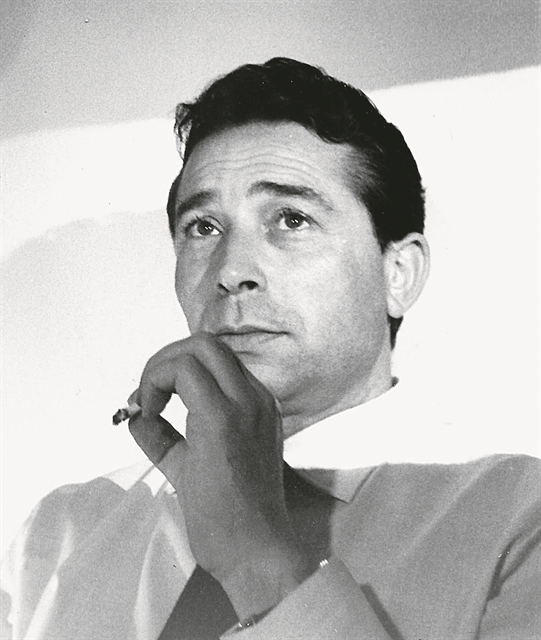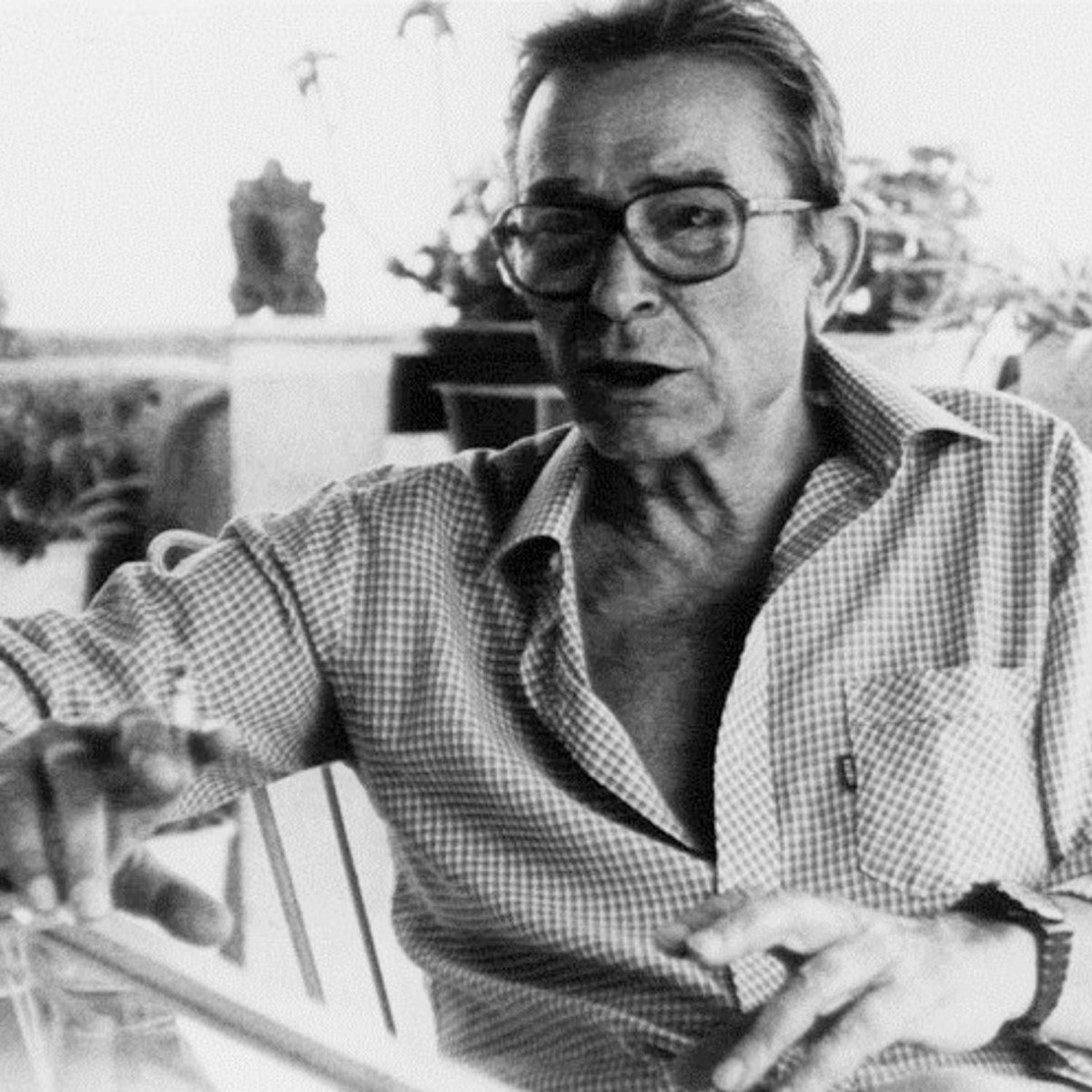



Iakovos Kambanellis, born on this day, was one of the most influential and deeply human playwrights in modern Greek history. A creator who shifted theatre from mere storytelling to a space of truth, social reflection, and existential questioning, he became the dramatist who shaped an entire era. His work captured the struggles, hopes, and contradictions of everyday people, leaving behind a legacy that continues to move and enlighten audiences.
“Theatre is a form of truth. And truth is never easy, but always necessary”
From Naxos to the Great Stages
Born in 1921 on the island of Naxos, Kambanellis grew up in a Greece marked by turmoil. Occupation, hunger, fear, and the daily fight for survival shaped his worldview and strongly influenced his themes. His experience as a prisoner in the German concentration camps left an indelible mark, later transformed into the powerful work Mauthausen, one of the most significant anti-war texts written in Greek.
After the war, he moved to Athens, where he discovered theatre almost by accident — through a personal need to express himself. His first major play, The Courtyard of Miracles, was not merely a success; it became a mirror of a country struggling to rebuild itself. With this piece, Kambanellis emerged as the voice of ordinary people, capturing their sorrows, dreams, and resilience.
A Playwright Who Defined an Era
The 1950s and 1960s marked the peak of Kambanellis’ influence, as he infused Greek theatre with realism, poetry, and social consciousness. His works explored injustice, loneliness, fear, power, and the human need for freedom. From Father Condemned to Death to The Neighborhood of Angels and the legendary The Great Circus, his plays became part of Greece’s cultural memory.
The Great Circus, in particular, transcended theatre. Performed during the dictatorship, adored by audiences, censored and later banned, it became a symbol of resistance. Kambanellis wrote with a sharp sense of responsibility toward society, believing that
“a writer does not write to hide — he writes to be seen, to speak, and to provoke where necessary.”
His theatrical universe blended everyday realism with symbolic depth, bridging popular experience with artistic expression.
Beyond Theatre: Cinema and Music
Kambanellis’ contribution was not confined to the stage. In cinema, he wrote the screenplay for one of the most iconic Greek films, Stella, directed by Michael Cacoyannis. The film introduced an unconventional heroine who defied societal norms and remains a cornerstone of Greek cinema.
In music, Mauthausen, set to music by Mikis Theodorakis, became a global anthem of memory and humanity. Its emotional power continues to resonate, reminding audiences that art can stand against oblivion.
Throughout his career, Kambanellis received numerous awards and distinctions, eventually becoming a member of the Academy of Athens — a recognition of his profound contribution to Greek culture.
A Legacy That Remains Alive
Kambanellis passed away in 2011, leaving behind a vast and timeless body of work. His plays continue to be performed, studied, and rediscovered, speaking to the core of the human experience. He gave voice to the unspoken, capturing the Greek soul in all its contradictions and strength.
Greek theatre would not be the same without him. And on this day, we honor a creator who transformed art into a mirror of society.
“I write to understand the world,” he said. Through his writing, he helped us understand it a little better too.