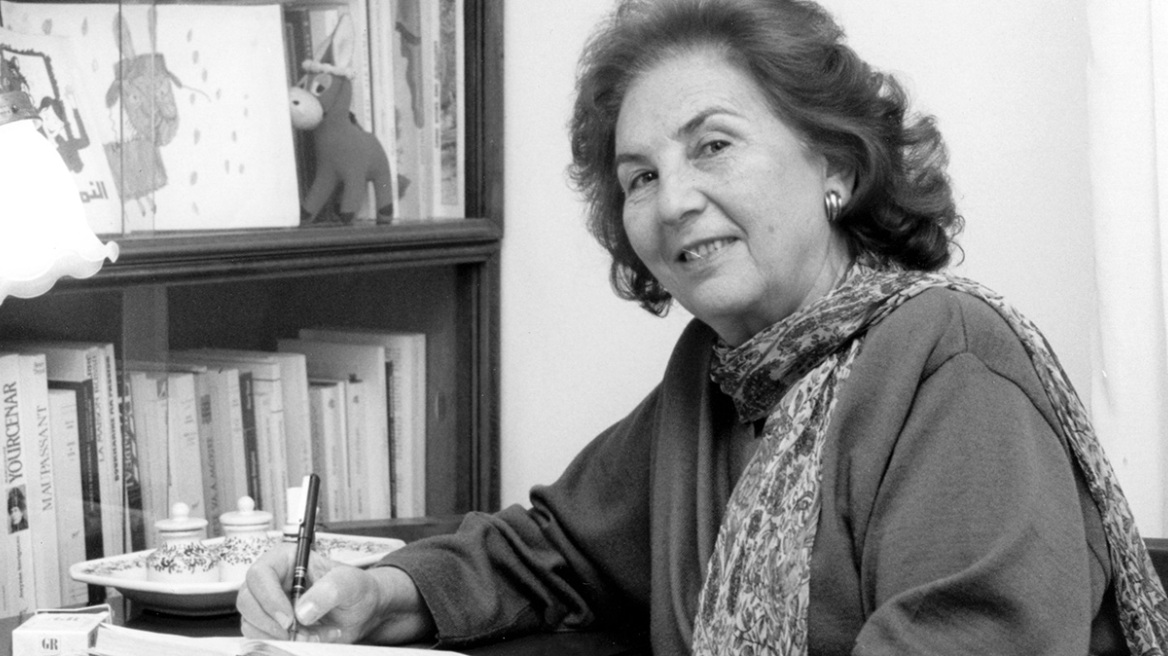



Alki Zei was not simply one of the most important writers of children’s and young adult literature in Greece. She was a storyteller who spoke to young readers with honesty, political awareness and deep humanity, at a time when silence was often easier than truth. Through her books, history ceased to be abstract and became personal, emotional and unforgettable.
Alki Zei was born on December 15, 1923, in Athens, with family roots in the island of Samos. She grew up in an environment that encouraged critical thinking and artistic sensitivity, something that would later define both her life and her work. From an early age, she was drawn to theatre and literature, studying at the Drama School of the Athens Conservatoire, before moving to Paris, where she attended screenwriting courses at the prestigious IDHEC film school.
Writing history for young readers
Zei’s literary voice was forged in the turbulent realities of the 20th century. Occupation, Resistance, Civil War, exile and dictatorship are not distant historical references in her books, but lived experiences seen through the eyes of children and adolescents trying to make sense of the adult world.
Her breakthrough came in 1963 with “The Tiger in the Shop Window” (To Kaplani tis Vitrinas), a novel that marked a turning point in modern Greek children’s literature. Set in pre-war Samos, the book combines political awakening, fear and imagination, offering young readers a story that respects their intelligence and emotional depth. It was translated into numerous languages and remains a classic to this day.
She went on to write some of the most iconic books of Greek literature for young audiences, including “Petros’ War”, a powerful account of life during the Nazi Occupation seen through a child’s eyes, “The Fiancée of Achilles”, “Near the Rails”, “Purple Umbrella”, as well as her autobiographical trilogy, where personal memory blends seamlessly with collective history.
Behind the writer who spoke so honestly to young readers was a woman who deeply believed in the power of personal memory. Alki Zei often said that many of her stories were born not from abstract ideas, but from family anecdotes and everyday moments. “The Tiger in the Shop Window,” for instance, was inspired by a real stuffed animal kept in a relative’s house in Samos — an object that, to her childhood imagination, felt almost mythical. This delicate balance between reality and imagination runs through all her work. History, in Zei’s writing, never feels distant or theoretical; it enters the living room, echoes in adult conversations and leaves a lasting imprint on the minds of children.
Exile, politics and international recognition
Alki Zei’s life was deeply shaped by her political beliefs. Married to playwright and politician Lefteris Papadimitriou, she experienced exile first in the Soviet Union and later in Paris, particularly during the years of the Greek military junta. The experience of displacement, loss and longing for home runs through her writing, never as bitterness, but as quiet reflection.
Her work gained wide international recognition, with translations into more than 20 languages and numerous awards. In 2010, she received the Greek State Prize for Literature for her overall contribution, acknowledging a body of work that influenced generations of readers. In later years, she was also named Honorary Doctor by Greek universities, in recognition of her lasting contribution to culture and education.
A voice that still speaks today
Alki Zei passed away on February 27, 2020, but her voice remains very much alive. Her books continue to be read in schools, discussed by educators and rediscovered by adults who once encountered her stories as children. What makes her work timeless is its refusal to underestimate young readers and its insistence that memory and critical thinking are acts of responsibility.
As she once said, “I write for children, but I never forget that they will become adults.” That belief lies at the heart of her legacy.
Born on this day, Alki Zei remains one of the most important literary voices Greece has given to the world — a writer who trusted young minds with truth and taught generations that stories can be a form of resistance.